
Chapter 50 - The Snail Shell House - part 3 — from my book Changes
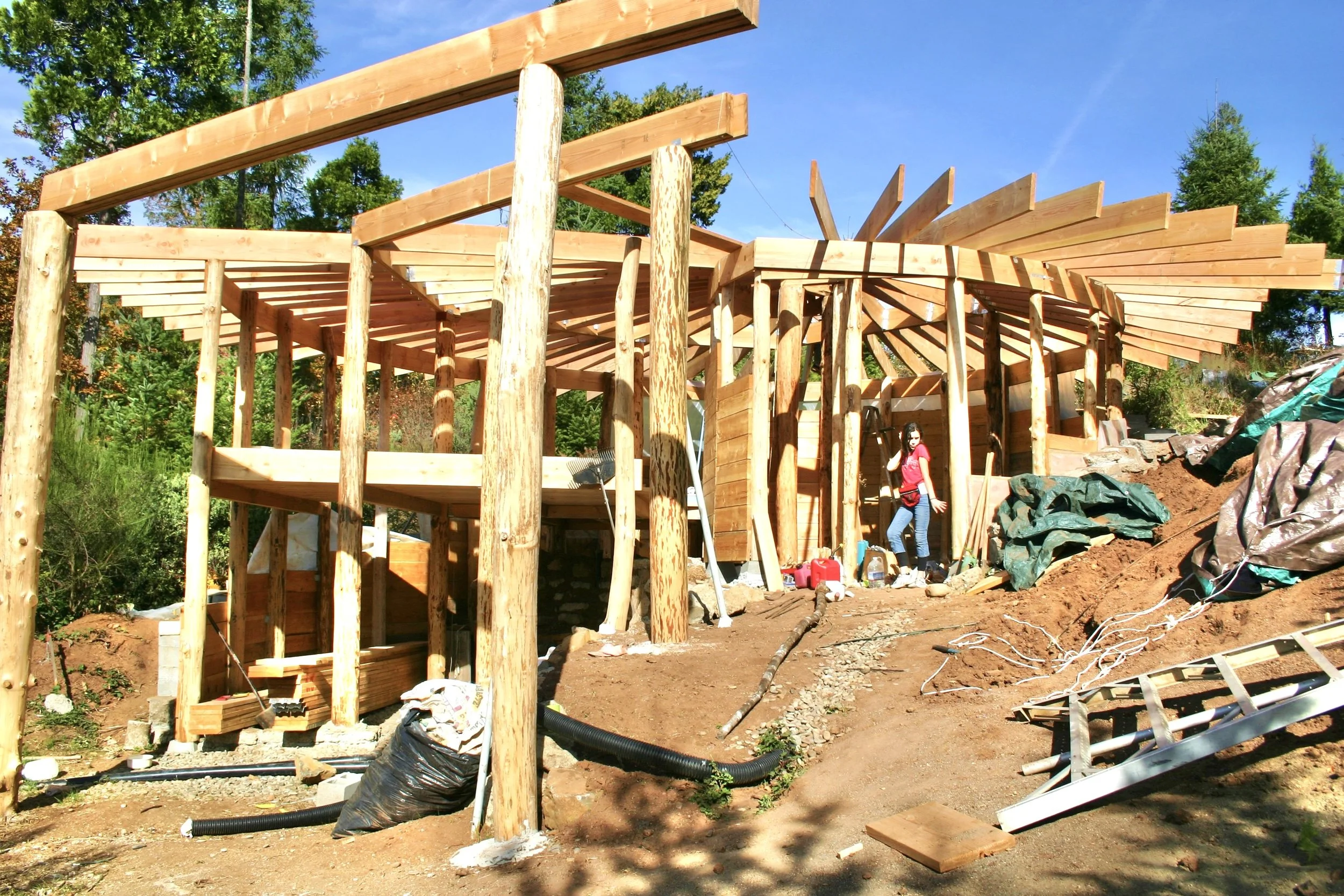
Getting the roof on. One of my daughters posing in the doorway.
Chapter 50
The Snail Shell House - part 3
My plans for the snail shell house were drawn out on two pieces of paper. One drawing was a view from the top, and the other drawing showed the different levels from a side view. I stuck with my plan, adjusted my drawing when needed, and solving little challenges as they cropped up, which was not very often, thankfully.
Designing structures is like candy to my brain. I love solving these kind of puzzles, but I hate figuring out all my individual steps ahead time, before the first breaking of ground. I figure things out as I go, and buy materials as I need them, often over or under buying so I don’t have to figure out the exact amount of boards, screws, etc. ahead of time. I treat designing and building structures the same way I treat making art. I figure things out as I go.
The funny thing is, I often look back at something I have built, especially this snail shell house, and wonder how I even did it! But through drawing and pondering, I can figure out each step, one at a time.
I was surprised at how comfortable my sons were, working up high on the roof in progress. One of my boys, Johnny, would even stand and walk across rafters, his stride spanning the empty gaps between them.
I stood on the main level, eyeballing the placement of each board as my husband and son held them in place, to make sure the sunburst effect of the rafters was even. Each rafter board was cut individually, to fit the specific span, then attached on each end with those smart little pieces of hardware called hurricane ties.
Because the rafters came from the center of the spiral, and went out across the support logs, past the edges of the roof shape, the top of the roof ended up higher than the outer outline, creating a slight cone shape, which posted a challenge for the plywood roofing that would support the pond liner, and earth and grass roof I was planning.
We ended up using very thin, somewhat flexible, plywood, and doubled it, overlapping where the seams came together. The plywood was screwed into the rafters from the top.
Once the plywood roofing was on, we covered the whole top with a huge heavy black pond liner, my friend/brother Kim brought to us. That pond liner was so thick, it was very awkward to work with, but we were able to wrap it over the slight cone shaped roof to create a perfect moisture barrier between the plywood and the soil for the grass roof.
Before adding the soil to the roof, we worked on the center spiral which was to be the skylight. The center spiral was a smaller, tighter spiral that was created to give more strength to the overall roof. After studying the snow loads and rafter lengths, I decided that 8 ft was the maximum distance I wanted to have as a span for the 2 x 12 fir boards I was using for my rafters. Consequently, I had added an inner spiral to my plans to make my shorter rafter lengths sufficient for the possible yearly snow load at that altitude.
The sky light inner spiral had it’s own outline within the rafters and we added another thickness of two by four boards to raise that spiral a little bit above the larger spiral. Over the rafters of the inner spiral we stretched two layers of white tarp, which let the light come through to the inside of the house. The first layer of tarp was stretched as tightly as we could stretch it, and screwed onto the edge outline of the skylight rafters with pan head screws, to prevent pooling of rainwater on the skylight. The second layer was laid on top of that, a little bit less tightly, and without any screws, to prevent holes.
The top tarp was then extended beyond the skylight to cover the pond liner, creating a shingle effect for shedding moisture.
Then came the dirt and hay. We did not dig up the ground for the dirt, we got it by pickup load from the store in town.
Once back at the snail shell house, after backing the pick up truck to the edge of the roof where the roof was only a couple feet off the ground, we shoveled the dirt from the truck into wheelbarrows on the roof, and spread it over the pond liner.
We had laid boards around the outline on the roof to help keep the dirt in place, then we sprinkled hay over all the dirt. Hay is full of grass seeds, so once the rain started, the grass started growing.
Adding the roofing materials on the roof was bitter sweet. Yes, we wanted protection from the rain, but the rafters, with the sunlight coming through, was so beautiful, like an artistic sculpture. That was lost with the roofing on top.
Building things changed me. Each thing I build gives me something more; a confidence; a belief in myself. I started this process of growing in confidence for building things by simply doing little handyman chores around the house. Then I started doing small remodeling projects, then larger ones. Eventually I started building small things and that led to larger builds. First was a gazebo, then an open air art studio, then a tool shed, then the wigwam, then the snail shell house, then a smaller spiral house, then a horse barn, then a bigger horse barn, then some more remodels of things that I wanted to make better use of.
I have gained a love of tools because tools make things easier, but I also love watching shows like Alone, where tools are scarce and the resources are what can be found in nature.
I do have to thank my mother, who had a father who build their houses, because she learned how to build by watching him. My mom taught my dad how to use tools, and consequently I learned a lot by watching my parents and helping them with projects while growing up.
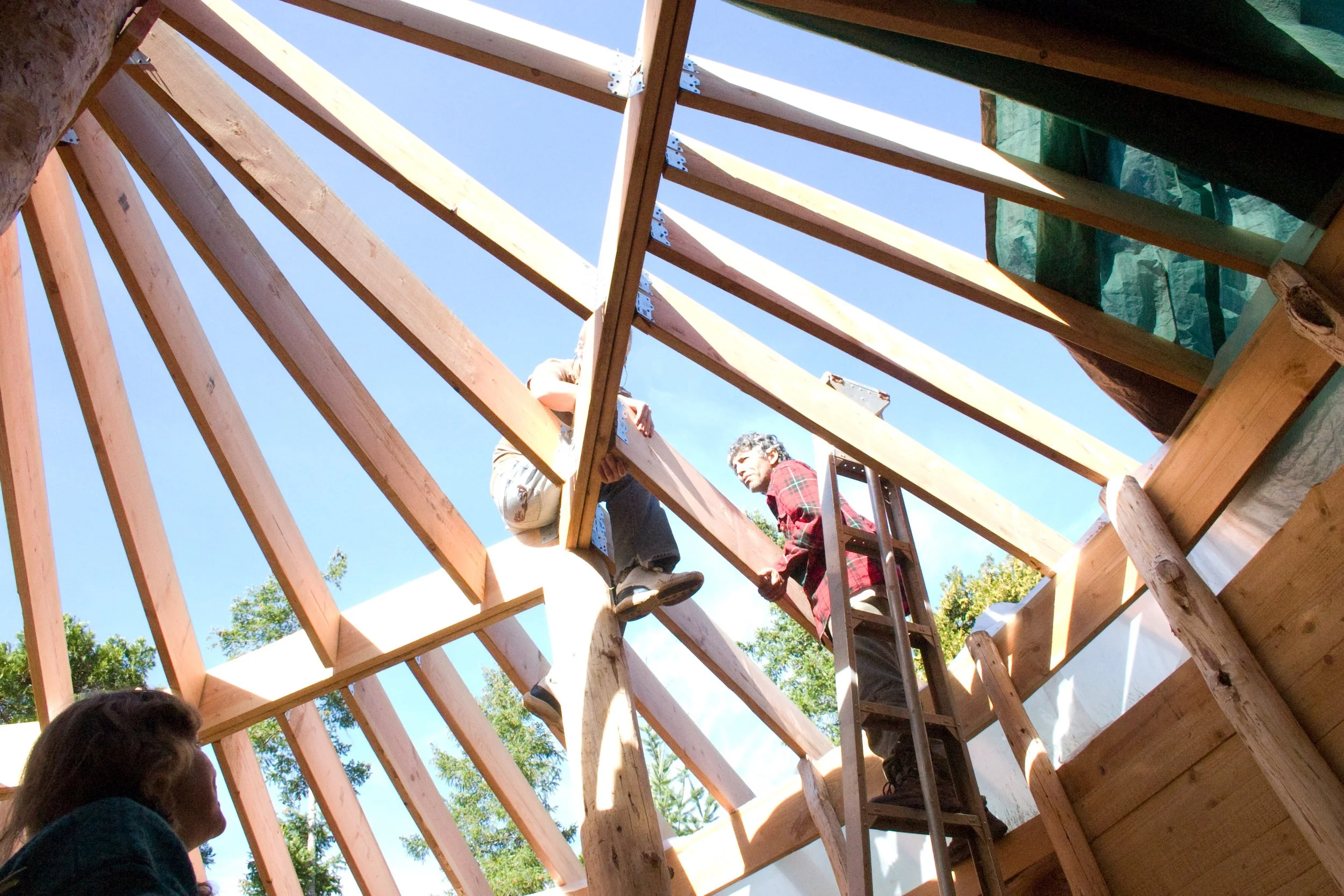
My husband and our son Marshal placing the rafters as I direct them. You can see the inner rafters of the inner spiral and the outer rafters on the outer spiral.
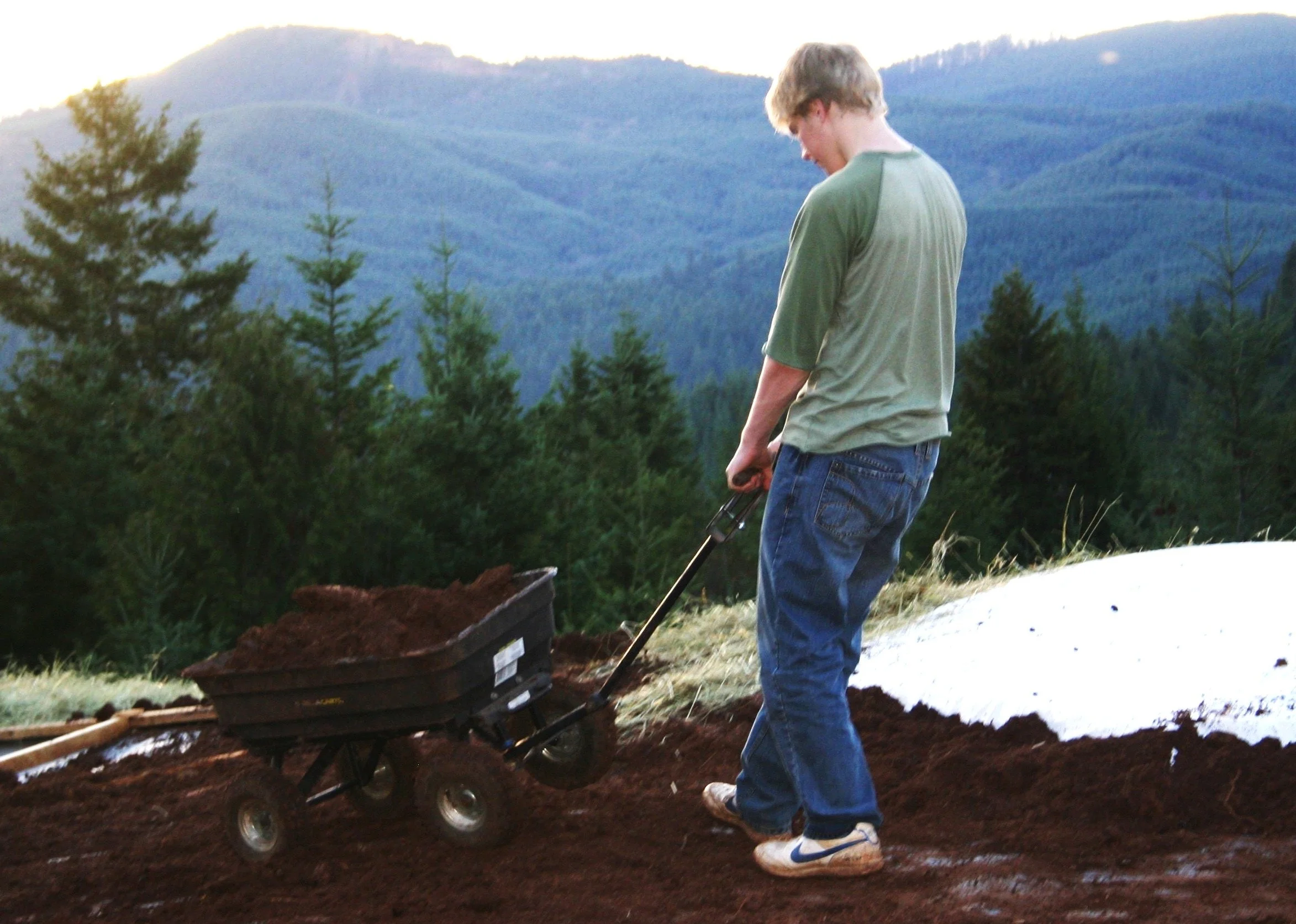
Our son Marshal spreading dirt on the pond liner on the roof of the snail shell house.
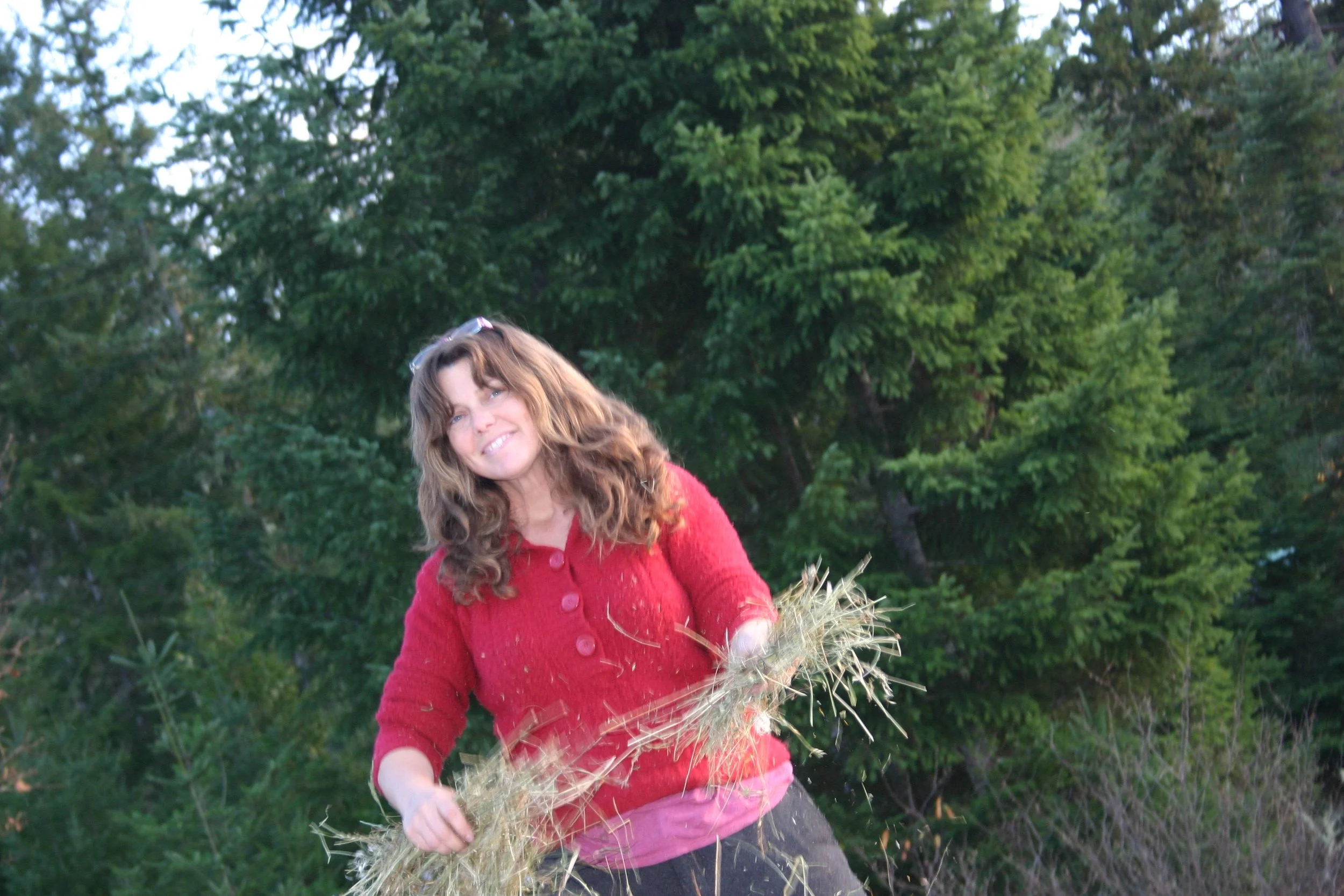
Me, spreading hay on the dirt on the roof of the snail shell house.