
Chapter 47 - The Wikki Tikki - from my book Changes
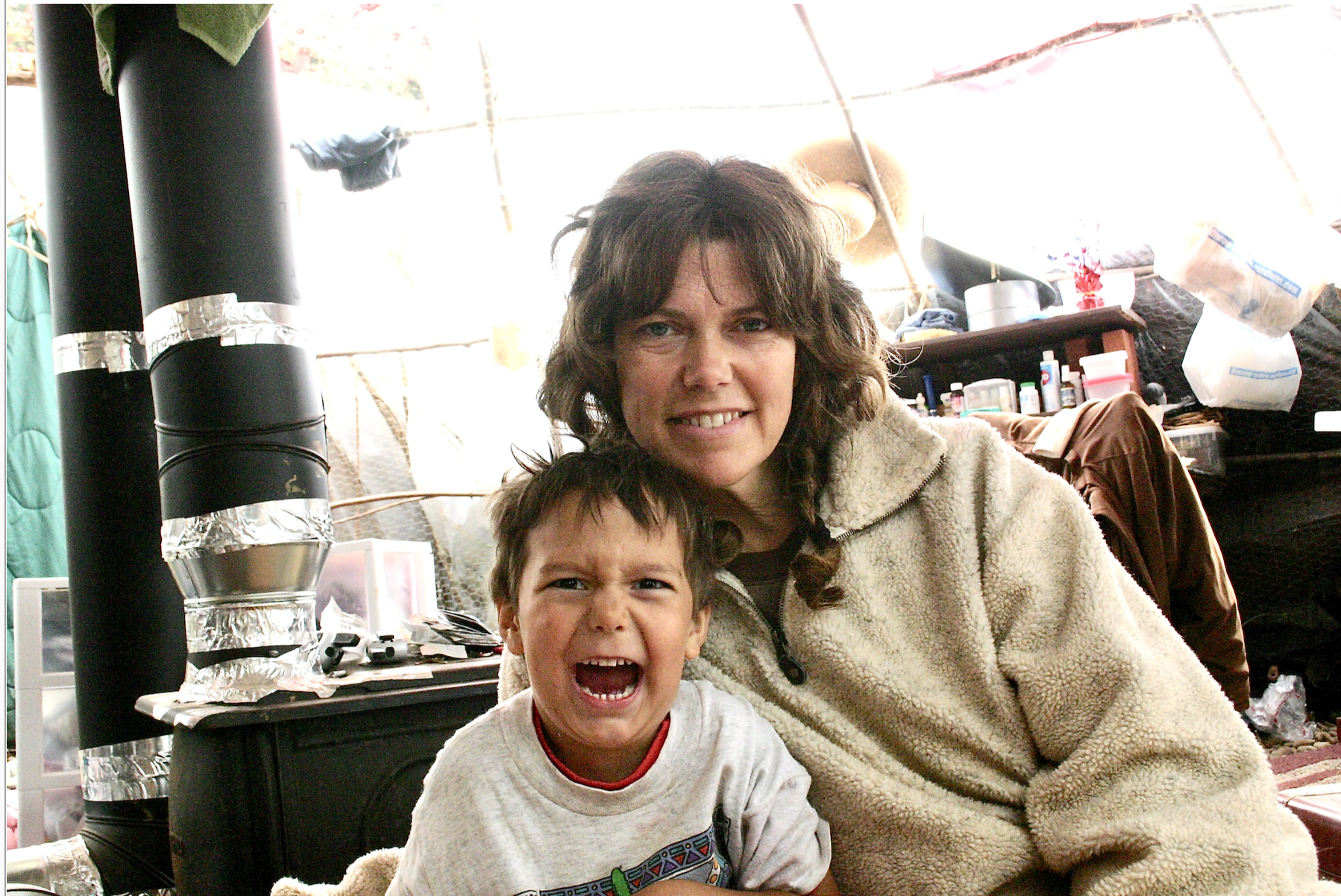
My youngest and me in The Wikki Tikki.
Chapter 47
The Wiki Tiki
So there we were, on the property, living out of tents, deciding what to do next. The ideas I had for what I wanted to build would take months to accomplish, so I decided we ought to build something much easier and quicker to live out of while building something more substantial. A wigwam was a perfect choice.
At Tom Brown Jr’s wilderness survival school I learned how to build a wigwam so we chose a level spot and got started. We needed saplings for the framework so I sent my teenaged son out to look for them. He had been to Coyote Tracks, the outdoor school Tom Brown Jr started for young people and their families, so he had learned something about how to find what you need in the woods. The key is, to ask for what you need, then surrender to the answer.
While we were preparing the ground for the saplings, he returned with an armful of long, thin, saplings. Here is the story he told.
When he first went out to look for the baby trees, he saw one and cut it down. Then he felt bad about it, like he shouldn’t have taken that one. Then he did what he ought to have done in the first place; he prayed to know where he could find the best saplings for the wigwam. When he surrendered to the answer, he felt led in a direction that opened up into an area where there were many saplings that had fallen down in the last storm! He easily collected all we would need and brought them to us. He gained a real understanding of the connection he could have with the unseen and eternal, and how a connection like that would make everything easier.
I was proud of him for having such an awesome learning experience.
Once we had the saplings, I measured them and we sorted them for the place they would each take in the wigwam framework. We figured out the directions; east, south, north, and west, and dug holes for the bases of the saplings to be placed into. It was raining a little bit while my husband and teen aged sons worked to dig the post holes. After they got down about a foot and a half they hit water. It was spring and the water under the ground was pretty high. There was also a very sticky layer of yellow clay under the red clay topsoil. I had learned to make clay bowls and fire them in a campfire at Trackerschool, so we saved the very sticky yellow clay for later use.
Once the ends of the saplings were buried in the post holes, we bend the tops of the north and south saplings together in the middle, up high, and overlapped them, tying them together. Then we did the same with the east and west saplings, crossing them in the middle, tying them together on top and securing them to the north and south saplings where they met.
We repeated this action with the in-between directional saplings, bringing them all together, overlapping, and tied together above us.
From there, we took the thinner saplings and tied them horizontally around the directional framework, about 3 feet off the ground. We repeated this a little higher, and a little higher, basically creating an upside down, very open, round basket shape.
Then we covered the entire structure with a heavy clear plastic to keep it dry inside.
Little did we know at the time that the moisture in the ground being heated up by the greenhouse effect of the plastic would cause evaporation from the ground, and condensation on the ceiling, causing the water to drip down on us like rain!
We solved this problem by putting blankets between the plastic and the sapling structure, to absorb the water and keep it from dripping on us, and to decrease the greenhouse effect of the clear plastic in the sun.
We had gravel brought in to cover the ground in the wigwam, then we laid out blankets and mattresses on the gravel. We were very comfortable in that cozy little wigwam. We named our wigwam The Wikki Tikki.
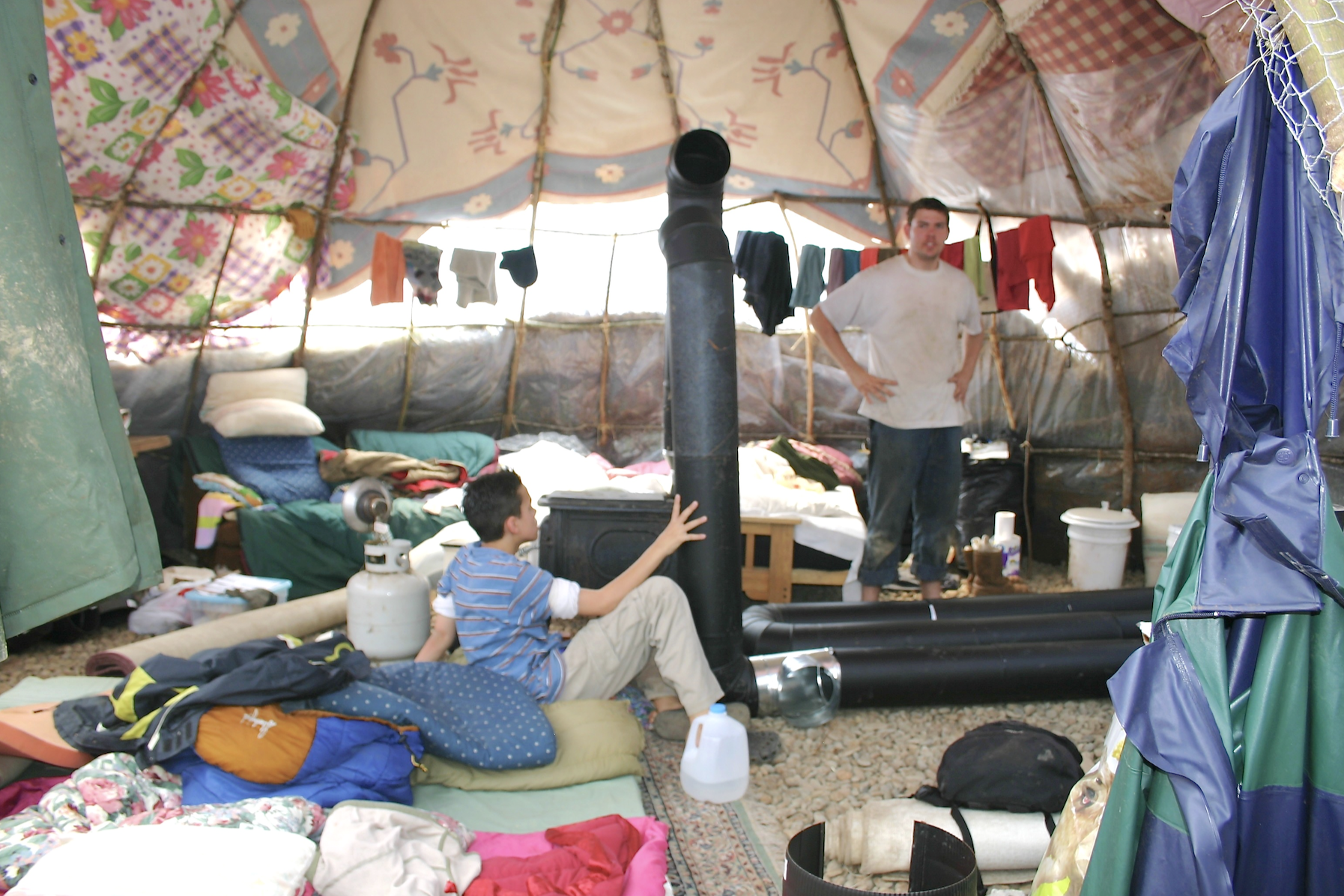
Two of my sons working on a stove pipe in The Wikki Tikki.